Dental check-ups and prevention: caring for your mouth before it hurts
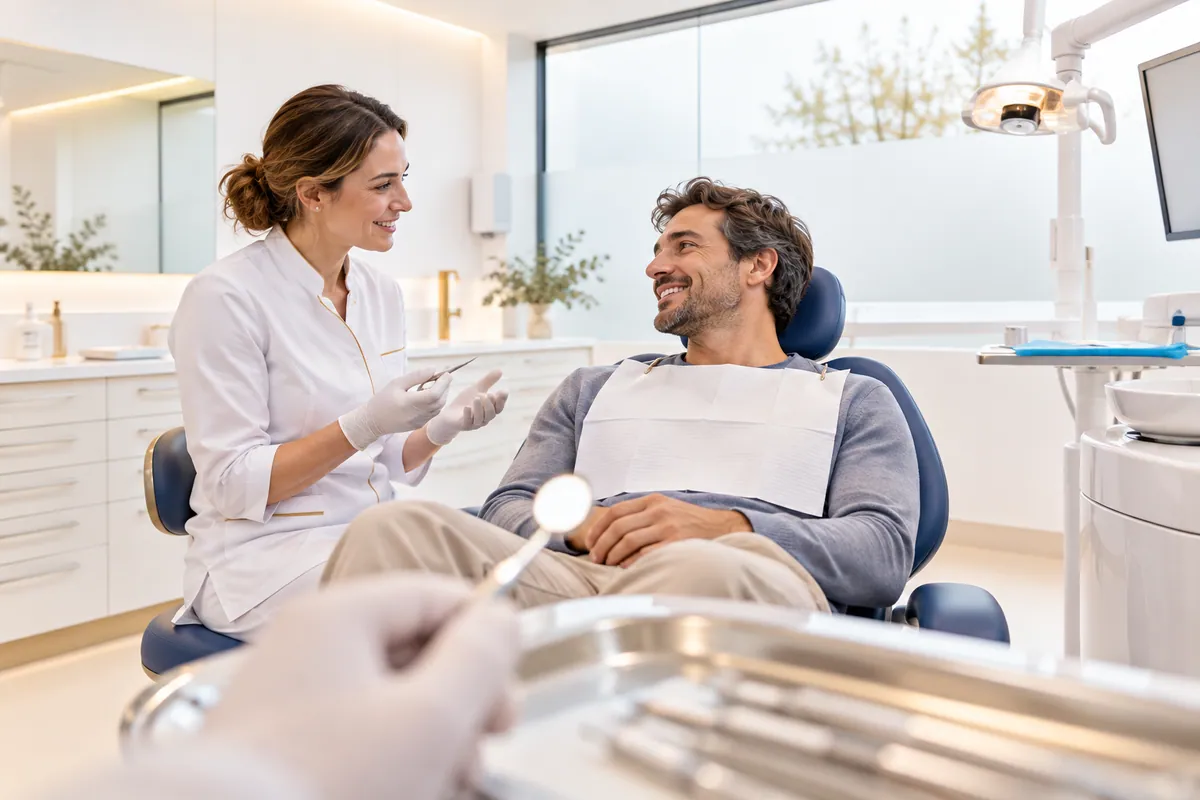
A dental check-up involves more than looking for decay. It can assess teeth, gums, restorations and other tissues, review your habits and help establish the follow-up you need. Attending without pain gives you a chance to ask questions and identify changes you may not have noticed. A review does not necessarily lead to treatment; it may also establish what can be monitored.
This guide offers practical ideas for daily care and preparing for a dental review in Pamplona. It explains what home care can contribute and what a professional assessment adds. It does not prescribe a universal interval between appointments. Your history, current condition, medicines and risk factors may mean that your follow-up differs from someone else’s, even if neither of you has pain.
The aim is a manageable routine and reviews with a clear purpose. You do not need to buy every available product or improve all your habits before arranging an appointment. A consultation can help identify which changes are useful, which difficulties need support and where to start if it has been some time since your last examination.
What can a preventive appointment assess?
The clinician examines the teeth, gums and other oral tissues, including any restorations, and asks about symptoms, habits, changes and general health. Imaging is used when it can provide necessary information; a thorough review does not mean everyone needs the same tests. Ask how the findings relate to your history and what they mean for your current care.
Mention sensitivity, bleeding, dryness, an unpleasant taste, discomfort when chewing or a sore area that has not healed. A symptom does not have to be severe to be worth discussing. Also report changes to medication or medical treatment. Information that seems unrelated to the mouth may still matter when planning dental care or understanding a change you have noticed.
At the end, ask what has been found, what needs attention and what can be monitored. If treatment is suggested, clarify its priority and reasonable alternatives. A helpful review should leave you understanding the reasons behind the recommendations. A list of procedure names and fees alone does not explain which decisions need to be made or how to prioritise them.
How often should you have a check-up?
The interval depends on the condition of your mouth and your individual risk. Repeated decay, periodontal disease or persistent dryness may affect the recommendation. The interval can change as your circumstances and oral health change. Ask why a particular schedule is advised rather than assuming that the frequency followed by a friend or relative will also suit you. Periodontal care.
Clarify which new symptoms should prompt earlier contact. Pain, a fracture, repeated bleeding or a persistent new sore may need attention before a planned review. Routine monitoring and assessment of a new problem serve different purposes. Knowing when to call helps you use the review schedule as part of a plan without treating it as a reason to ignore changes.
If you have not attended for years, explain the situation and your current concerns. The appointment can establish where things stand and help organise priorities. You do not have to put every habit right before you come. Advice about where to begin and which measures need professional support may be one of the most useful outcomes of the visit.
Brushing: reach the surfaces with an appropriate technique
Brushing with fluoride toothpaste is part of everyday preventive care. The technique needs to reach the tooth surfaces without excessive pressure. Brushing harder does not guarantee better cleaning and may be unsuitable for sensitive tissues. If you are uncertain about your approach, ask for a demonstration or a review of your technique using a brush appropriate to your needs.
A manual or electric toothbrush should be chosen with effective, comfortable cleaning in mind. A more complex device does not automatically compensate for areas that are missed. Explain difficulties with hand movement, access to back teeth, sensitivity or maintaining a routine. These details can help the clinician recommend an approach that you can use reliably and comfortably.
Following a consistent sequence can help you remember the inner, outer and biting surfaces. It may be useful to begin in the same area and work around the mouth, rather than concentrate mainly on teeth visible when you smile. Ask which areas you tend to miss. A complete routine is about access and technique, not repeated force on the easiest surfaces.
Cleaning between teeth: choose tools that fit
A toothbrush does not reach every interdental area equally. Depending on your mouth, floss, interdental brushes or another suitable tool may be recommended. The choice takes account of the spaces, any restorations and your dexterity. Different areas may need different approaches, so one tool used in the same way everywhere may not meet all your needs.
Ask for guidance on both size and technique. Forcing an oversized interdental brush into a space is not a useful way to improve cleaning. Buying several sizes without understanding their fit can also become frustrating. A practical demonstration should show which tool is intended for which area and how to use it without injuring the gum.
Repeated bleeding during cleaning needs advice about gum health and technique. You do not have to choose between painful cleaning and abandoning the area without guidance. Inflammation, the method of use or another issue may need attention. Describe precisely where the problem occurs and what tool you use so the recommendation can address that difficulty.
Toothpaste and mouthwash: understand each product’s purpose
Fluoride toothpaste has a preventive role. The appropriate concentration and other features should follow advice suited to your circumstances. If sensitivity or dry mouth is a concern, ask which product makes sense for you. Combining several toothpastes in the hope of adding their benefits does not necessarily improve care and can make the routine harder to understand.
Mouthwash can have a specific role, but it does not replace brushing or cleaning between the teeth. Ask why a rinse has been recommended, when to use it and for how long. Some products are intended for a particular course rather than indefinite use. A label promising gum care or fresh breath cannot determine whether you personally need it.
Bring the names of products you use regularly and mention irritation, altered taste or difficulty following instructions. Reviewing the whole routine can help distinguish essential steps from optional additions. You should understand how any recommended products fit together. A manageable routine is easier to maintain than a collection of items whose purpose or method of use is unclear.
Sugar, drinks and how often your teeth are exposed
When discussing decay risk, consider a whole day rather than a single meal. Repeated sugary snacks or drinks can create frequent exposure even when each serving seems small. Work habits, drinks at a desk and food between meals may be easy to overlook. Describing an ordinary day helps identify practical changes that fit your circumstances.
Tell the clinician about particular nutritional requirements or a prescribed diet. Dental advice should work with these needs, and questions may require coordination with the professional responsible for them. Ask what adjustments are possible within the instructions you already follow. A preventive plan should be usable in your life, including your work schedule, rather than depend on an unrealistic routine.
Discuss acidic drinks and any habits you associate with wear or sensitivity. Tooth damage is not always caused by decay, and an examination helps distinguish the processes involved. Enlarged photographs cannot reliably diagnose enamel problems. Explaining habits and sensations allows the clinician to consider them alongside the actual condition of your teeth and the rest of the assessment.
Dry mouth: a symptom worth discussing
Persistent dryness can affect comfort, eating and oral health. It may relate to medication, medical conditions or other factors, and should not simply be accepted as inevitable with age. Explain when it occurs, whether it wakes you at night and whether it makes speaking or eating difficult. These details give the clinician a clearer understanding than describing the mouth as occasionally uncomfortable.
Bring your medication list, but do not stop prescribed treatment yourself. Any possible connection may need discussion with the professionals responsible for that treatment. The dental team can advise on oral care and whether coordination is appropriate. A product that temporarily improves comfort does not necessarily identify or resolve the cause of the dryness.
Ask which measures and products are suitable and what follow-up you need. Repeatedly sipping sugary drinks to ease dryness may affect the teeth, so discuss the complete routine. Advice should reflect medical conditions and habits. A brief note about when dryness is most noticeable can help you explain it without needing to remember every episode during the appointment.
Gum bleeding, bad breath and unpleasant tastes
Repeated gum bleeding deserves assessment even without pain. The clinician can examine inflammation, cleaning technique and the supporting tissues. Do not assume it is only a new toothbrush or accept it as normal because it has happened for years. A persistent pattern is useful information, and an assessment can help establish what is responsible and what care is needed.
Bad breath or an unpleasant taste can also have different causes. Freshness after a rinse does not show that the underlying cause has been addressed. Explain when it happens and which measures you have tried. The dental team can assess oral factors and advise whether other assessment may be needed, rather than relying entirely on products that briefly mask the symptom.
If periodontal disease is diagnosed, maintenance forms part of ongoing care. Ask about the recommended reviews and how to clean difficult areas. Follow-up should monitor an identified condition and your response, with a clear purpose for any procedure. Understanding that purpose can help you maintain attendance even when symptoms are less noticeable or your gums feel comfortable.
Looking after crowns, implants and dentures
Restorations and implants still require care and review of their surrounding tissues, margins and function. If you have a crown, bridge, implant or removable denture, ask how to clean the relevant areas. Access may differ from an unrestored tooth. A demonstration adapted to the design can help turn general advice into something you can follow at home.
Report food trapping, an uncomfortable edge, looseness or a change in how your teeth meet. Do not adjust components yourself or use increasing amounts of adhesive indefinitely to compensate for a denture that no longer fits comfortably. An assessment can establish what has changed and whether adjustment, repair or another approach is appropriate for your mouth and the appliance.
If you have changed practices or moved, bring any information you have about previous treatment or implants. It can provide context alongside a current examination. You do not need to understand every technical reference to keep and share the record. Having it available supports continuity and reduces reliance on remembering the details of treatment carried out years earlier.
Persistent changes in the mouth need assessment
An ulcer, lump, red or white patch, or irritation that persists should be assessed by a dentist or doctor. A change that has not settled within about two weeks deserves attention. This does not mean every lesion is serious. It means an examination is needed rather than trying to reach a diagnosis by comparing photographs online.
Explain when the change appeared, whether it has altered, whether it hurts and whether something rubs against the area. Do not repeatedly handle it or apply irritating substances. Mention difficulty swallowing, speaking or moving your tongue. The appropriate urgency depends on the symptoms as a whole and professional assessment; significant or worsening symptoms should be reported promptly.
A dental review provides an opportunity to examine tissues as well as teeth. If a finding needs further assessment, the clinician may advise tests or referral. Ask what the next step is and when it should take place. Keep that instruction clear and separate from routine care so an important follow-up is not lost among other discussions during the appointment.
Making care manageable when your routine is difficult
Difficulties with cleaning may involve limited dexterity, pain, fatigue, changing hours or needing help from another person. Describe those limits so that tools and techniques can be adapted. Simply being told to brush better may not solve the obstacle. The aim is an achievable routine that can be maintained, with appropriate support and a chance to review what works.
Choose a specific adjustment to discuss: reaching one difficult area, learning an interdental technique or keeping supplies somewhere accessible. If a carer helps, ask how they can do so comfortably and respectfully while supporting your independence. The clinician can explain suitable tools and the sequence of care, taking account of what you can still manage yourself.
If a recommendation proves difficult, return with the specific problem. Saying that you cannot reach a particular tooth gives the team something practical to address. You do not need to describe the whole routine as a failure. Small adjustments and a review of technique can help make care more consistent without expecting every aspect to be solved at once.
Frequently asked questions about check-ups and prevention
Should I attend a review even if nothing hurts?
A review can identify changes without symptoms and help organise preventive care. Its timing depends on your situation and risk. Attending does not mean that a treatment is required at every appointment. Ask what will be assessed and why the next interval is recommended, so the schedule has an understandable place in your care plan.
Will an electric toothbrush prevent decay on its own?
No. It needs to be used effectively as part of care that includes other relevant factors. An electric brush may make cleaning easier for some people, but does not replace the rest of the routine or risk assessment. Choose a brush you can manage well and ask how to check that you are reaching the necessary surfaces.
Can mouthwash replace cleaning between teeth?
It should not be treated as a substitute for mechanical plaque removal. Interdental tools are selected according to your spaces and needs. If cleaning is difficult, ask for a demonstration or a suitable alternative method. Adding a rinse without addressing the difficulty may leave the area inadequately cleaned, even if the mouth feels fresher afterwards.
What if I have not had a check-up for several years?
Arrange an assessment and describe your current concerns. You do not need to resolve every habit before attending. The visit can establish the condition of your mouth, identify priorities and help prepare a plan. If cost or anxiety is a concern, explain it so that the discussion and organisation of care can take it into account.
Do I need to send photographs to request an appointment?
No. The general form collects contact details to arrange a visit, rather than clinical images. If further information is needed, the team can explain an appropriate way to provide it. Photographs also do not replace an examination. Start with the reason for requesting contact and bring your questions to discuss during the assessment.
Your dental check-up in Pamplona
At Dental Divina Pastora, you can request a review to assess your oral health and discuss prevention. The clinic is at Calle Loza, 4, Pamplona. Read our comprehensive dentistry page and contact us to arrange a visit. The online form submits a request; the team will contact you about an appointment according to availability, rather than automatically confirming a time.
Bring a medication list, available details of previous dental treatment and a few questions that matter to you. Before leaving, aim to understand what is healthy, what needs attention and what you can do at home. Preventive care cannot promise that no problem will ever occur. It helps you recognise changes, address relevant risks and maintain follow-up suited to your life and health.