Clear aligners or braces: the choice starts with diagnosis
If you are considering improving the position of your teeth, your first question may be whether to choose clear aligners or fixed braces. Appearance matters, but should not decide the choice by itself. Orthodontics plans tooth movements and assesses how teeth meet. Choosing a technique requires understanding the problem, the condition of your mouth and how you can follow treatment in everyday life.
This guide compares practical questions to bring to an orthodontic consultation in Pamplona. It does not identify one winning system for everyone or allow an appliance to be chosen from photographs. Similar-looking smiles may need different movements. People with similar diagnoses may also have different routines, priorities and follow-up needs. A reasonable plan connects these considerations and explains why an option is proposed.
The useful question is not just “Which is less visible?” but also “Which treatment suits me, and what will I need to do?” This includes diagnosis, cleaning, appointments, possible adjustments and retention afterwards. Understanding the whole process helps avoid assuming that care ends when the final active appliance is removed. Your role continues through the different stages of the plan.
What an orthodontic assessment considers
Tooth position is one part of assessment. The relationship between the upper and lower teeth, gum health, decay, previous treatment and factors affecting movement also matter. Records and investigations are selected according to the case. Patients do not all need the same combination, and a visual simulation cannot replace clinical interpretation of the information gathered.
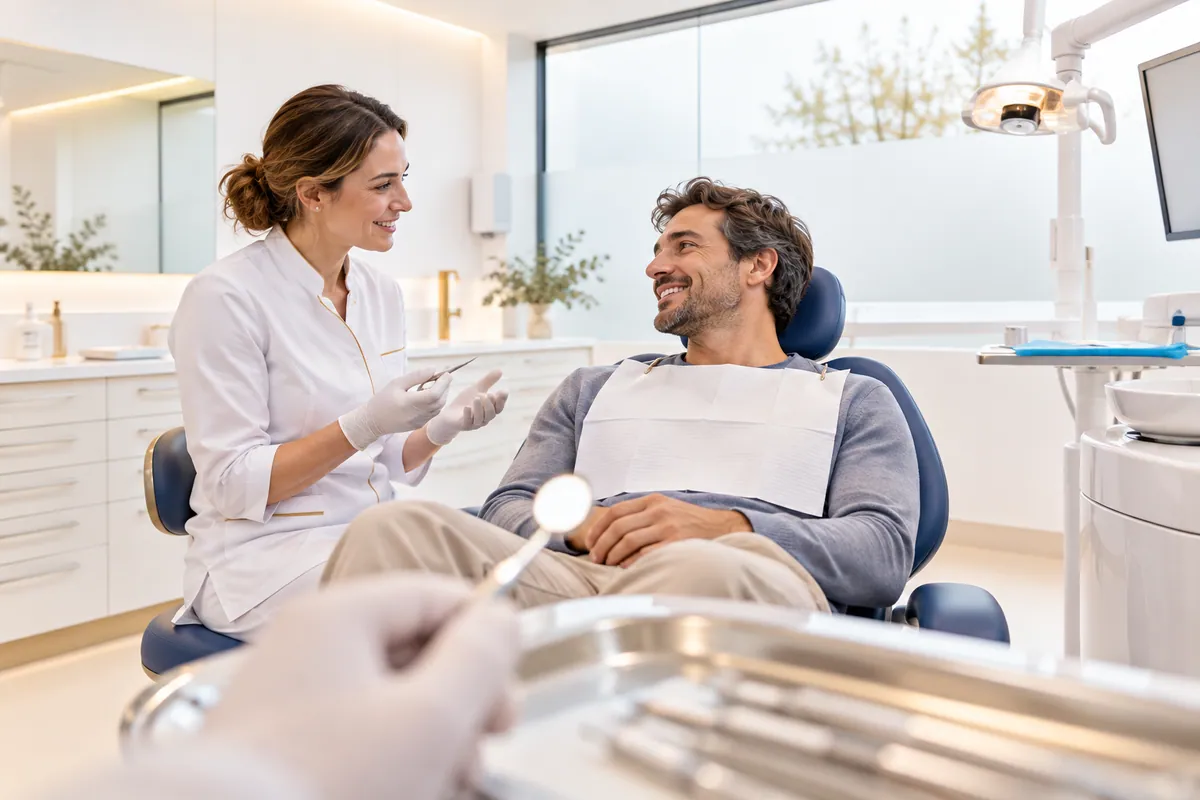
Explain your concerns with examples: an overlapping tooth, a difficult area to clean, gaps or an uncomfortable bite. You can also explain a primarily cosmetic goal. The professional should relate your preference to what is feasible and healthy. Sometimes a concern about one area requires assessment of both arches to understand how the teeth work together.
Mention previous treatment, injuries, jaw discomfort and medication. If you have had orthodontics before, bring retained appliances or explain when you stopped using them. This history provides context, without meaning repeat treatment is inevitable or can follow exactly the previous plan. Your mouth as it is now is the starting point for a new assessment.
How clear aligners work
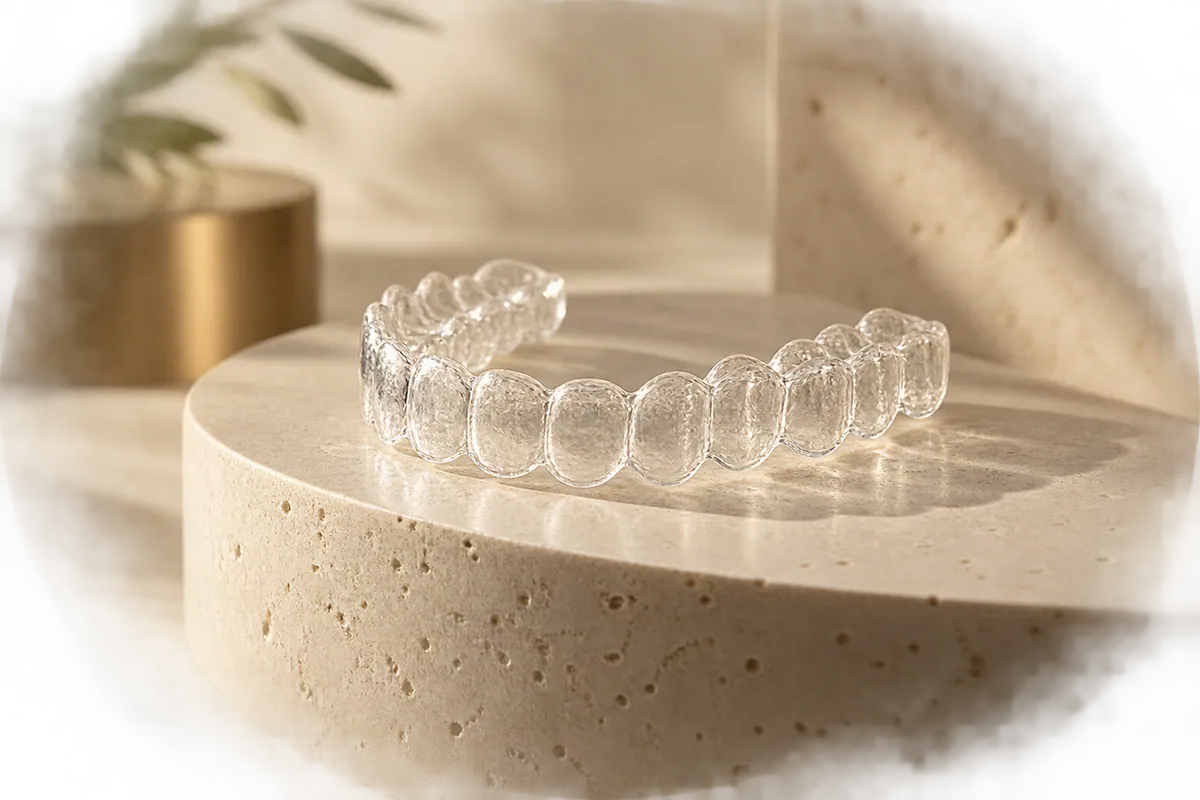
Aligners are removable appliances changed according to a planned sequence. Follow the professional’s instructions on daily wearing hours and when to move to the next set. Removability can help with some routines, but also requires consistency. An aligner left in its case cannot perform its intended movement, however carefully the sequence has been planned.
Some plans use small attachments bonded to teeth or other auxiliary components. “Clear” therefore does not necessarily mean every component will be invisible. Different movements also present different challenges. Ask which additional measures are expected in your case, what changes might become necessary and how the team will check that teeth are responding as planned.
Consider practical situations such as eating out, changing work hours, travelling or speaking for long periods. You do not need to predict adaptation perfectly; describe your routine and ask what organisation is required. If you expect difficulty remembering to reinsert aligners, say so before starting. The choice should consider realistic adherence without turning difficulties into a question of blame.
How fixed braces work
Brackets are bonded to teeth and work with archwires and other components adjusted during follow-up. A fixed system does not rely on remembering to put it back after meals. Patient participation still matters: cleaning, looking after components and using additional aids when prescribed remain part of treatment. Fixed does not mean that the appliance can be forgotten. Fixed braces.
Reviews monitor progress and allow necessary adjustments. Report a loose bracket or an uncomfortable wire end and follow the advice given. Do not bend or cut structural components without professional instructions. At the beginning, ask how to handle problems and which contact to use, so you have clear guidance if something happens between appointments.
Different bracket systems exist, and their characteristics should be explained in relation to your plan. Material and appearance alone do not determine the outcome. Before comparing brand names, understand the intended movements, limitations and follow-up. You can then assess an option by its clinical usefulness and fit with your life, as well as how it looks.
The practical comparison worth making
Aligners and braces both need diagnosis, planning and reviews. Their visible difference—removable or fixed—has practical consequences. Aligners require organisation around wearing and storage. Braces require adapted cleaning around components and care with food. Neither approach allows you to forget about treatment, so the comparison should include daily responsibilities rather than appearance alone.
Think about the routine you can maintain in an ordinary week and during a difficult one. If you eat out often, where would you store aligners? With braces, how would you make time for careful cleaning? You do not need every detail solved beforehand. Describing actual difficulties allows more useful advice and a choice based on realistic expectations.
Avoid reducing the comparison to “discreet” versus “visible”. Discuss required movements, gum health, existing restorations, cooperation and retention. One system may be suitable while another requires different conditions or additional measures. The explanation should refer to your records and objectives, rather than a general claim that one technique is always superior to every other option.
Gum health and decay before moving teeth
Orthodontics forms part of overall oral care. Decay, gum inflammation or other problems must be assessed to decide how they should be addressed before or during treatment. Straightening teeth does not automatically eliminate periodontal disease or replace restorative care. An aligned smile still needs healthy tissues and a cleaning routine that can be maintained consistently. Periodontal care.
Mention bleeding gums or sensitivity even if the appointment was requested for cosmetic reasons. These findings can change priorities. Preparation is not an unnecessary obstacle: it helps establish appropriate conditions for movement and a cleaning routine before appliances are added. Understanding why this stage matters makes the sequence of the proposed plan clearer.
Ask which signs to watch for during treatment and when an extra review is appropriate. If cleaning advice is difficult to follow, request a demonstration. Tools and techniques should be adapted rather than repeating instructions you cannot apply. Follow-up appointments are also an opportunity to address these difficulties, alongside checking the position of teeth.
Eating, cleaning and looking after appliances
With aligners, follow instructions on removal, storage and cleaning. Avoid improvised wrapping that makes them easy to lose. A labelled case and a simple routine can help. If an aligner breaks or disappears, ask what to do next rather than skipping several stages yourself to compensate. The appropriate response depends on your current treatment stage.
With braces, ask which foods or habits could damage components and how to clean less accessible areas. Technique should cover every surface, not just the parts visible when smiling. A review of interdental tools may help. The aim is effective plaque removal without excessive force against the appliance or gums, using a routine you can repeat comfortably.
Bring questions to reviews in either type of treatment. Describe a sore, discomfort that is not improving or another concerning change, and ask how to respond. Symptoms do not all require the same action. Telephone advice may help determine whether an appointment is needed, while specific recommendations must reflect the appliance and your actual oral condition.
Duration and changes: why there is no universal deadline
Duration depends on the movements required, biological response and follow-up. An initial estimate provides guidance rather than a guarantee of an identical finishing date for everyone. Ask about stages, progress criteria and reasons the plan might change. Understanding these is more useful than relying solely on a quoted number of months without knowing the assumptions behind it.
Aligner treatment may need a revised sequence or additional stages. Braces may also require changes to components or mechanics. Such changes need explanation, particularly if they affect timing, appointments or cost. Ask how adjustments are communicated and documented, what is already included and which circumstances would require you to consider a new proposal.
Mention an upcoming wedding, trip or important event. The team can discuss options and expectations, but a social deadline does not determine the safe speed of tooth movement. Plan in advance rather than assuming treatment must finish for an event. Health and stability should remain part of the conversation alongside your practical and personal priorities.
Retainers: the stage that should not be overlooked
After active movement, retention helps maintain the position achieved. Depending on the plan, this may involve removable retainers, fixed components or both. Wearing instructions and reviews should be clear before active treatment ends. Finishing braces or aligners does not mean the mouth no longer needs follow-up or that the result will remain unchanged without care.
Ask how to clean and store retainers and what to do if one breaks, is lost or stops fitting. Do not force an appliance that no longer fits as before, or ignore a detached fixed retainer. Contacting the team allows assessment and a decision. Keeping instructions and contact details avoids spending weeks without guidance after a problem.
Retention also has maintenance and cost implications. Check that it is explained when comparing proposals and ask what is included. A plan describing only the initial appliance leaves an important stage unclear. Understanding the final stage from the beginning supports a more complete decision and helps you organise continuing care once active tooth movement is finished.
Understanding an orthodontic cost estimate
Ask for the assessment, proposed system, reviews, expected auxiliary components and retention to be identifiable in the estimate. Clarify how replacements, breakages or plan changes are handled. Different treatments require different items. What matters is knowing what is included, what depends on progress and which circumstances could lead to an additional proposal requiring further discussion.
A useful comparison connects cost with diagnosis and scope. Correcting a limited problem differs from managing a more complex case. Two documents naming the same type of appliance may not describe equivalent treatment. Note the objectives, stages and follow-up in each proposal so you understand what you are comparing before drawing conclusions from price alone.
If you need payment arrangements, ask about the clinic’s available terms without assuming a particular finance option. This blog does not set universal prices or payment conditions. Decide after an individual explanation and a clear estimate. Taking time to review information is compatible with progressing towards thoughtful treatment and understanding the responsibilities it involves.
Questions to organise your orthodontic consultation
Write down your main reason for considering orthodontics before comparing appliances. You might be concerned about crowding, a gap, a particular tooth or how the teeth meet. Separating those concerns helps the clinician explain which changes are possible and whether the proposed treatment addresses all of them. If photographs have prompted the consultation, describe the feature you notice rather than asking for an exact copy of someone else’s result.
For each option, ask about the daily routine as well as its appearance. With removable aligners, clarify the wearing instructions, cleaning, storage and what to do if one is lost or damaged. With fixed braces, ask how to clean around the brackets and which problems require contact. Explain any difficulty with work routines, travel or manual dexterity. Practical information can help you understand how the plan would fit your life without assuming that every appliance suits every person equally well.
Check what is included in the estimate and how changes to the proposed sequence would be discussed. Ask about review appointments, any additional treatment considered necessary and the retention phase after the teeth have moved. If a detail is uncertain at the first consultation, write it down as something to confirm. A clear distinction between an initial proposal and the final agreed plan avoids treating an approximate schedule as a guaranteed completion date.
Keep the instructions and appointment details somewhere easy to find. If another professional is also caring for your gums or carrying out restorative treatment, tell the orthodontic team so the sequence can be considered together. At each review, mention difficulties you have actually encountered rather than silently changing the instructions. The purpose of ongoing appointments is to assess progress and respond to the individual case, with decisions based on what is happening in your mouth.
Frequently asked questions about aligners and braces
Are aligners suitable for every case?
No such assumption should be made. Suitability depends on the movements needed, oral conditions and expected cooperation. Some cases require additional components, another technique or a combined approach. Assessment allows those choices to be explained. A photograph of an appliance or someone else’s smile cannot provide enough information to establish whether that system is appropriate for you.
Is adult orthodontics purely cosmetic?
The motivation may be cosmetic, functional or related to coordinating other treatments. Adults may also have restorations, periodontal issues or a relevant treatment history. Age alone does not describe the problem or determine the plan. Explain your goal and ask which changes orthodontic movement can address and which expectations need a different assessment or additional discussion.
Do aligners remove the need for reviews?
No. Follow-up is essential. Initial planning must be checked against actual changes in teeth and tissues. Reviews help identify problems, assess fit and answer questions. A removable system does not make orthodontics an unsupervised process. Ask how contact and appointments will be organised and which situations need an in-person assessment during your treatment.
What if I have not followed the wearing instructions?
Explain clearly what happened and ask how to continue. Do not compensate by advancing through sets yourself or changing the sequence. Knowing the circumstances allows fit and instructions to be reviewed. Describe whether the difficulty involved forgetting, pain or a routine that did not work. A specific explanation helps the team find a practical response.
Can I choose on price alone?
Price is relevant but needs context. Compare the diagnosis, objectives, appointments and retention included. If proposals differ substantially, ask about the scope of each before reaching a conclusion. An informed choice combines clinical suitability with your practical ability to organise, pay for and maintain the care described in the plan, rather than focusing on a single advertised figure.
Your orthodontic consultation in Pamplona
At Dental Divina Pastora, you can request an assessment to discuss aligners, fixed braces and what your smile needs. The clinic is at Calle Loza, 4, Pamplona. Explore both treatment pages and note your priorities. A website request starts contact; the appointment time is agreed with the clinic and is not automatically confirmed when you submit the form.
Before leaving, aim to understand the problem identified, why a system is proposed, your responsibilities at home and the retention stage. You do not need to decide under pressure or master every appliance name. You need a plan that makes sense for your mouth and can be followed in everyday life. That conversation supports care throughout the process.
What should I note after the assessment?
Summarise the main goal, proposed technique, wearing and cleaning responsibilities, and outstanding questions in your own words. If you cannot explain one part, ask about it at the next conversation. Keep the estimate and instructions, particularly when comparing alternatives or coordinating other dental care. You do not need to decide from incomplete memories: ask for a term to be clarified or a stage identified in the document. Understanding the plan helps you take part and raise everyday difficulties while they can be addressed.