Teeth whitening or veneers: start with the change you want
Improving your smile does not automatically require complex treatment. Your concern may be colour, shape, a chipped edge, a gap or a tooth’s position. Whitening and veneers address different aims and should be considered in that context. An assessment helps identify your priorities, examine the health of your mouth and explain which options are appropriate for the changes you would like to discuss. Teeth whitening.
This guide compares common approaches to cosmetic dentistry and helps you prepare realistic questions. A photograph cannot determine the right technique or guarantee a particular shade, shape or lifespan. A reference image can help explain your preferences, but it cannot replace an examination of your own teeth, gums and bite or a discussion of treatment’s possible limitations.
A useful starting question is: what would I like to change, and what would that change involve? Consider preserving tooth tissue, ongoing maintenance, possible repairs and the full cost. Discussing these points early helps you decide calmly. A result that suits you involves more than choosing the whitest possible shade; comfort, function and how you feel about your smile also matter.
Cleaning, whitening and veneers have different purposes
Professional cleaning can remove deposits and some surface stains. Whitening aims to change the colour of natural teeth using suitable products and instructions. Veneers are restorations placed over part of a tooth’s surface to change features such as its shape or appearance. Each approach has indications and limitations, and one does not automatically provide everything another can achieve. Dental veneers.
The phrase “a whiter smile” can hide several different concerns. Surface staining, a tooth’s underlying shade and an existing restoration may need different approaches. An examination helps distinguish them and explain which features each option could change. It also allows the clinician to identify elements that may continue to look different after treatment and discuss them before you decide.
Ask what cleaning alone might achieve, what whitening could add and what would require a restoration. The discussion may include choosing no treatment if there is no suitable indication. Understanding less invasive options is part of informed decision-making, especially where a procedure would permanently change tooth tissue. You should be able to compare the expected benefit with those implications.
Assess oral health before changing appearance
Before cosmetic treatment, the clinician should assess decay, gum health, sensitivity, existing restorations and other relevant findings. Mention pain or bleeding even if you booked the appointment to discuss colour. These findings may affect the order of care. The cosmetic proposal should fit into an overall plan for your mouth, including any problems that need attention first.
Report grinding or clenching, previous fractures and jaw discomfort. Mention earlier dental treatment and any whitening products you have used, including products bought independently. These details can affect suitability, expectations and maintenance. Earlier photographs may help describe changes you have noticed, but they cannot establish the current condition of the teeth or replace an examination.
Ask which issues need to be addressed first and which can be considered within the same plan. A clear explanation helps distinguish a health need from a preference about appearance. Both can matter to you, but they may call for different decisions. You should understand what is proposed, its purpose and any limitations that would remain afterwards.
What can teeth whitening change?
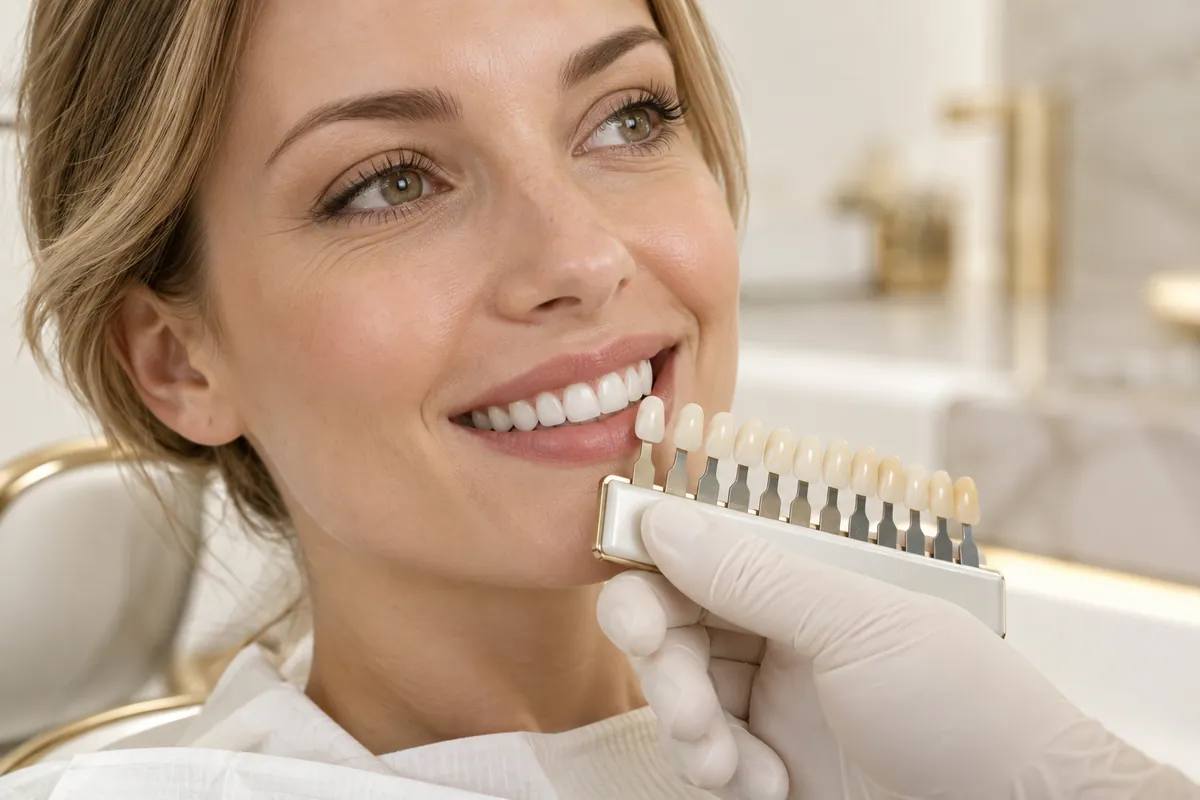
Whitening acts on natural tooth colour. The response depends on the starting condition and the nature of the discolouration. A fixed number of shades or an identical response from every tooth cannot be guaranteed. Ask what change is reasonable to consider in your case and how the clinician will assess progress during the proposed course.
Crowns, veneers and fillings do not whiten in the same way as natural teeth. This matters particularly when restorations are visible in your smile. Ask how whitening could affect the overall colour balance and whether an existing restoration might become more noticeable. That does not automatically mean it must be replaced; it means that it needs to be considered when planning.
Discuss sensitivity and possible discomfort before starting. Supervised instructions allow the approach to be adapted to your clinical situation and give you a route for advice if problems occur. Do not add products or extend their use yourself to seek a lighter shade. A larger amount or longer application does not necessarily make treatment more effective or appropriate.
Professional supervision and whitening at home
Professional whitening can involve different approaches, including use at home under dental supervision where appropriate. Confirm which options are available and suitable during your consultation. A prescribed home routine still involves assessment, instructions and follow-up. It is different from selecting a product independently without first knowing whether your teeth and gums are suitable for its use.
Ask which product would be used, how to apply it, for how long and what to do about sensitivity or irritation. The instructions should be clear enough to follow without improvising. If you miss an application, ask how to continue rather than compensating with extra product. Follow the advice for your own treatment instead of combining it with someone else’s routine.
Avoid improvised whitening mixtures or abrasive home remedies. A sensation of immediate cleanliness does not show that a method is suitable for enamel or gums. If you have already tried something, tell the clinician what it was and how you used it. This helps them assess the mouth and advise on the next step without leaving relevant information out of the discussion.
What are veneers, and what should you ask about them?
Veneers are restorations placed on a tooth’s surface to change certain visible features. Different materials and techniques may be considered. Suitability depends on the condition of the tooth, the intended change and the maintenance involved. A technique being prominent on social media, or described as newer, does not establish that it is appropriate for every patient.
Ask whether the tooth needs preparation and how much tissue would be changed. Removing enamel is irreversible, so this deserves a clear explanation before you consent. Do not assume that any veneer can simply be removed later to leave the original tooth unchanged. The clinician should discuss conservative possibilities and explain the implications of the particular approach being proposed.
Also ask what would happen if a veneer chipped, detached or needed replacement. Whether a repair is possible depends on the material and the circumstances. These questions help you understand the ongoing commitment associated with a restoration. An informed decision considers both its initial appearance and the care, reviews or further work it may need over time.
Colour, shape and position: clarify your priorities
Whitening may be considered when colour is the main concern. A restoration may be relevant to a chipped edge or missing tooth structure. If the issue is tooth position, orthodontic options may need discussion. These are examples of different planning questions, not diagnoses you can make at home. Describing the change you want helps the clinician assess the appropriate choices. Clear aligners.
Bring a short list of priorities. You might first want to discuss one tooth that looks different, then an uneven edge, and finally the overall shade. This can keep the conversation focused on what matters to you. It also helps distinguish a longstanding concern from a small feature you have only noticed in a highly enlarged photograph.
Reference images can help you discuss particular features, such as colour or shape. Your lips, visible gum and facial proportions also affect the appearance of a smile, so another person’s result cannot simply be copied. Ask which aspects of a reference are realistic in your case. The aim is a proposal suited to your mouth and preferences.
Considering a treatment proposal without rushing
Ask about the findings, options, irreversible changes and maintenance. If several treatments are combined, clarify their order and the reason for it. Timing may matter where natural tooth colour and restorations need to be considered together. An event date can be part of the discussion, but the schedule should still reflect appropriate assessment and treatment planning.
Find out how the proposed appearance will be discussed and when you can ask questions before a definitive stage. Any preview or planning tools should be confirmed with the team; their availability cannot be assumed from examples seen elsewhere. Ask for explanations that relate to the actual procedure being considered for you and the decisions you will need to make.
If a procedure would alter healthy tooth tissue, take time to understand it. Ask about more conservative options and the consequences of choosing no treatment. Your wish to improve your smile remains a valid topic for discussion. This information helps you decide whether the expected benefit fits your priorities and the implications for future care.
Caring for your mouth after cosmetic treatment
Cleaning and dental reviews remain necessary after whitening or veneers. Your teeth and gums continue to need regular care. Ask about recommendations specific to your treatment and any habits worth reviewing. Do not brush more aggressively or introduce additional products simply because you have had cosmetic work. Follow the agreed routine and ask before making changes you are unsure about.
If you have restorations, learn how to clean their margins and the spaces between teeth. Report bleeding, persistent food trapping or difficulty reaching an area. Appearance and gum health are connected through daily care. A restoration should be considered in terms of how it can be maintained in your mouth as well as how it looks in a photograph.
Contact the clinic if your bite feels different, a restoration fractures or new discomfort develops. Do not glue a detached veneer with household adhesive or try to polish an edge yourself. Keep any detached piece and ask for advice. A professional assessment is needed to establish what happened, whether the piece can be reused and which repair or replacement is appropriate.
Longevity, further treatment and realistic expectations
Whitening and veneers cannot guarantee an unchanged appearance indefinitely. Tooth colour may change, and restorations may require maintenance, repair or replacement. Individual circumstances and use affect the outcome. Ask which care is recommended, when reviews are needed and how any future top-up or repair would be assessed. General lifespan claims should not substitute for discussing your particular situation.
An immediate after-treatment photograph is only one part of assessing a result. Comfort, function, access for cleaning and your own perception also matter. If something concerns you, describe it specifically at your review. Explaining that an edge looks different when you speak gives the team a clearer starting point than a general request for everything to be perfect.
“Natural” can mean different things to different people. Discuss the shade, shape and small variations you want to keep or change. That conversation helps establish shared expectations. Any illustration or preview still needs to be accompanied by an explanation of clinical limitations. No treatment should be presented as a promise of perfection, or as an exact reproduction of another person’s smile.
Costs: compare the complete proposed treatment
A written estimate should explain what procedure is proposed and what the fee covers. If there are several stages, ask about preparation, the main treatment, any additional restorations and follow-up. Clarify how later reviews, repairs or whitening top-ups are handled. Do not assume that every future intervention is included unless the clinic has explicitly confirmed it.
A price per veneer or whitening session can be difficult to compare without the full treatment details. The diagnosis, number of teeth, material where relevant and scope of the plan all matter. If two proposals differ substantially, ask what each includes and why. This allows you to consider their actual content rather than treating different plans as equivalent.
The clinic must confirm the current fees and any payment arrangements it offers. This article does not set prices or promise finance. Review the information and bring back specific questions if needed. Understanding what will be done and how it will be maintained is part of the decision, alongside organising payment and deciding whether the proposed change suits your priorities.
Frequently asked questions about cosmetic dentistry
Will whitening change the colour of my fillings?
Restorative materials do not respond like natural teeth. Visible fillings, crowns or veneers therefore need to be included in planning so you understand the possible colour balance afterwards. Do not assume that all parts of the smile will reach the same shade, or that existing restorations must automatically be replaced. Their condition and appearance need individual assessment.
Are veneers always reversible?
No. Where preparation removes tooth tissue, that change is irreversible. Ask what preparation is proposed for your teeth and what it means for their future care. Discuss conservative alternatives and the possibility of later maintenance or replacement. A general description of a veneer technique cannot replace an explanation of the procedure planned for your particular case.
Can I whiten teeth if I have pain or decay?
Pain, sensitivity and suspected decay need assessment before a colour change is planned. Do not start an unsupervised whitening product to improve the appearance before your appointment. Tell the team about your symptoms and let the examination guide the order of care. A cosmetic preference can then be considered alongside any clinical problems that require attention.
Can a veneer correct any crooked tooth?
Tooth position, the bite and the amount of tissue that would need changing all influence suitability. Orthodontics or other alternatives may need consideration. A consultation allows you to compare what each option could change and the implications of doing so. A front-facing photograph alone does not provide all the information needed to choose between these approaches.
How can I explain that I want a subtle change?
Describe what concerns you and which features you would like to keep. References can help communicate colour or shape without expecting an exact copy. Ask how the team would interpret those preferences within the clinical possibilities. Specific examples usually help more than broad words such as “perfect” or “natural”, which can suggest quite different results to different people.
A practical way to prepare for your consultation
Make three short lists: what I would like to change, what I want to keep and what I need to ask. You might list an uneven colour, the overall shape you like, and questions about tooth preparation or maintenance. These notes support a conversation rather than a self-diagnosis. They help you assess the proposal against the reasons you originally sought advice.
If photographs or social media comparisons prompted your interest, consider how you feel in everyday situations too. An enlarged, specially lit or edited image may emphasise a detail differently from ordinary conversation or smiling. Discuss that difference if it matters to you. Taking time to consider expectations can help you make a choice that reflects your own preferences.
Cosmetic dentistry in Pamplona: arranging the next step
At Dental Divina Pastora, you can request an assessment to discuss whitening, veneers and other options for your smile. The clinic is at Calle Loza, 4, Pamplona. Read the relevant treatment pages and explain your priorities when contacting us. Submitting the form starts a request; the clinic will arrange the appointment with you according to your needs and availability.
A useful proposal should explain what can change, what should be preserved and what each option involves afterwards. The appearance you want needs to be considered alongside oral health, function and everyday care. Beginning with a clear explanation helps you make an informed choice, with realistic expectations about both the initial result and the future care of your teeth.