Bruxism: understanding teeth clenching and grinding
Bruxism involves clenching or grinding the teeth and can occur while you are awake or asleep. Some people notice it when concentrating; others learn about it because someone hears grinding at night or a dentist identifies possible signs. Its intensity and effects vary. Assessment aims to understand the context, symptoms and any damage before recommending measures appropriate to the individual.
This guide explains what to observe, how bruxism differs from other conditions and what a dental splint may offer. A photograph of worn teeth cannot establish the diagnosis, and a headache should not automatically be attributed to the jaw. Pain, fractures or concerns need an assessment that considers different possible causes and relates the findings to your history.
Protecting the teeth, managing discomfort and understanding a pattern of activity are connected aims, but they are not identical. A single measure may not address all three. Ask what each part of the plan is intended to achieve and how its usefulness will be reviewed. This helps you understand the purpose of care and set expectations that fit your situation.
Bruxism while awake and during sleep
Clenching while awake can go unnoticed until you become aware of tension in your jaw. It may happen during concentration or at particular points in the day. Recognising the pattern can provide useful information for your appointment. You do not need to monitor your mouth continuously or feel responsible for noticing every episode; a few ordinary observations can support the discussion.
Sleep bruxism is not managed in the same way as a conscious daytime habit. You may be unaware that it happens. Observations from someone sleeping nearby can help, but do not replace assessment. If you also have sleep difficulties or other symptoms, the clinician may consider whether another healthcare professional should be involved. The same investigations are not needed for everyone.
Distinguishing these circumstances helps make advice more specific. A general suggestion to relax does not explain every case, and wearing a splint does not automatically stop activity during sleep. The discussion should cover what has been noticed, its effects and suitable measures. Depending on the findings, care may include protection, attention to daytime habits and review of symptoms over time.
Which symptoms and changes should you report?
Possible concerns include jaw tiredness, sore facial muscles, tooth sensitivity and changes to tooth edges or restorations. Wear and fractures may also be relevant. No single finding tells the entire story. Wear can reflect earlier activity and does not show exactly what is happening now. The clinician considers it alongside current symptoms, your history and the rest of the examination.
Describe whether discomfort occurs on waking, towards the end of the day, during meals or at particular times. Mention whether it comes and goes, affects one side or has recently changed. A brief note can help you remember. There is no need to repeatedly test the jaw or provoke pain; explain what you notice during your normal activities.
Arrange assessment for a broken tooth, significant pain or a marked change in how far you can open your mouth. Facial swelling, fever or difficulty breathing or swallowing should not simply be attributed to bruxism. Seek care appropriate to the urgency; call 112 in an emergency. An existing diagnosis does not automatically explain every new symptom you experience.
Bruxism and temporomandibular disorders are different terms
Temporomandibular disorders can affect the jaw joint and associated muscles. Bruxism describes an activity and is not a term for all these conditions. There may be relationships, but it should not become a universal explanation for pain, clicking or restricted movement. An examination helps clarify which findings are present and what needs further assessment or management.
A painless click does not necessarily have the same significance as painful difficulty opening your mouth. Facial pain can also have causes outside the teeth or jaw. Describe the symptoms and allow the clinician to consider alternatives. Referral or coordination with another professional may be appropriate and can be part of finding a better explanation and plan for your discomfort.
Ask what diagnosis is being considered and how certain it is. If a measure is proposed, clarify whether it aims to protect teeth, manage loading, help with pain or monitor change. Understanding the purpose avoids expecting one appliance to correct every joint problem or remove all possible causes of facial discomfort. It also makes later review more useful.
What may be assessed at your appointment?
Assessment may include questions about symptoms, habits, sleep, medication and previous care, together with examination of the teeth, restorations, muscles and jaw. Tests are chosen when they can answer a relevant clinical question. Not every patient needs imaging or a sleep study. Ask why a test is proposed and how its result could affect the plan.
Bring a medication list and mention whether symptoms began around a change in treatment. Do not stop prescribed medicines yourself. Information about caffeine, alcohol, smoking and periods of stress may also be relevant. Sharing these details helps build a fuller picture of your circumstances and supports a practical discussion of factors worth considering in your care.
If you already have a splint or mouthguard, bring it with you. Explain who recommended it, when you wear it, how you clean it and whether the fit has changed. The appliance can provide useful information and may need assessment. A guard bought independently or provided years ago should not be assumed to meet your present needs without review.
What can a dental splint do?
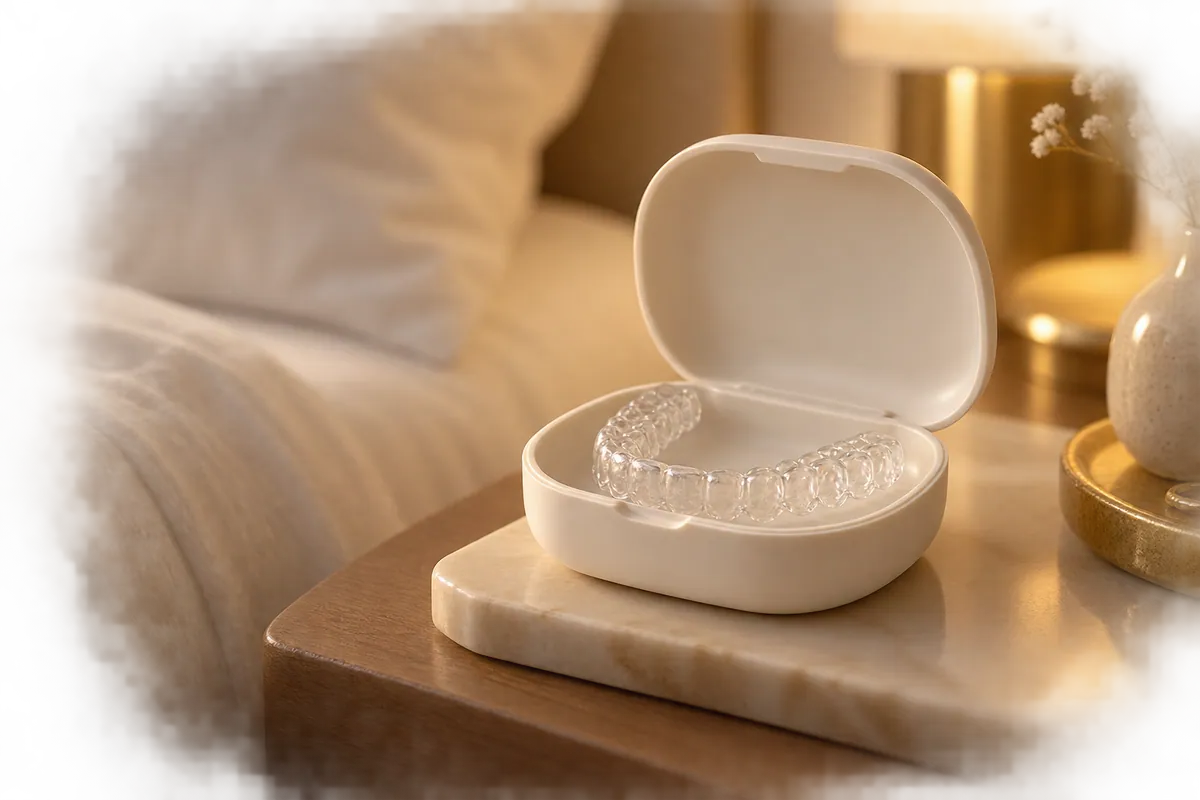
A splint may be used to separate and protect tooth surfaces where clinically indicated. Its design, fit and wearing instructions should suit the individual. The clinician should explain why it is recommended for you, how the fit will be checked and what follow-up is needed. These details are part of its use, rather than an optional addition after delivery.
A splint cannot guarantee that bruxism will disappear or that every form of jaw pain will resolve. It may be useful within a wider plan, with a specific purpose and limitations. If you expect it to stop clenching or grinding permanently, discuss that expectation. A clear explanation lets you judge the appliance against the aims actually proposed for your care.
A clinically prescribed splint may differ from a mouthguard designed for another purpose. Devices that cover the teeth are not automatically interchangeable. Tell the clinician if you have been using one independently. Assessment of its fit, your symptoms and the intended purpose can guide whether it is appropriate to continue, change or stop using it under professional advice.
Fitting, cleaning and reviewing your splint
When you receive a splint, ask for a demonstration of how to insert and remove it, and for cleaning and storage instructions. These depend on its material and design. Do not use heat or cleaning products without checking their suitability. Written instructions help you avoid applying advice intended for a different type of appliance or relying on memory alone.
Seek advice if you develop new pain, a persistent change in your bite or a splint that no longer fits. Do not force it into place, cut it or adjust it with household tools. The clinician can assess the appliance and your mouth to identify the problem. Ask what adaptation is expected and which changes need a review instead of simply trying to tolerate them.
Bring the appliance to the reviews recommended by your clinician. If you have struggled to wear it as advised, explain the reason: discomfort, forgetting, cleaning difficulties or interference with another routine. This gives the team a practical problem to address. An instruction that you cannot follow consistently needs discussion so that any adjustment is made with professional guidance.
Daytime habits: build awareness without constant checking
If you clench while awake, identifying particular situations may help you work on a comfortable resting posture as advised. A discreet reminder can prompt a brief pause and awareness of tension. The aim is to return to your activity with that understanding, rather than spend the day repeatedly checking your jaw or treating every sensation as a problem.
Ask which habits are relevant to your symptoms, such as holding the teeth together during concentration or repeatedly loading the jaw. Advice should be individual. Avoid forceful exercises or attempts to reposition the joint after watching a video. If therapeutic movements are recommended, they should be explained clearly, adapted to your condition and reviewed by an appropriate professional.
If stress affects you, you can discuss support and rest habits as part of the wider picture. This does not mean the pain is imaginary or that a single emotional cause explains it. Attention to your circumstances can sit alongside a clinical assessment of the mouth and jaw. Useful advice should take your symptoms seriously and include a plan for follow-up where needed.
Sleep and general health: when wider assessment may help
When symptoms occur at night, discuss how you sleep and any known sleep-related problems. The clinician will decide which information matters and whether coordination with a doctor or another specialist is appropriate. A dental splint does not replace assessment of a sleep disorder where that is indicated. Each measure should have a clearly explained role in your care.
Apps, recordings and other people’s observations can offer information, but they cannot provide a definitive diagnosis on their own. They need to be interpreted in context. Equally, hearing grinding does not mean that every person needs complex testing. Decisions depend on the symptoms, history and clinical question, rather than a standard list of investigations applied to everyone.
Tell your dental team about medical treatment you already receive. Coordination helps clarify what each professional is addressing and reduces the chance of conflicting instructions. Do not change medication, devices or established treatment routines without consulting the responsible professional. Any assessment of bruxism should take account of your existing care and the reasons other treatments have been prescribed.
Tooth wear and restorations: understand the different aims
Wear or fractures may lead to discussion of protecting teeth and repairing damage. The need depends on its extent, function and the condition of the mouth as a whole. Not every worn edge requires immediate restoration. Conversely, changing a tooth’s appearance does not automatically remove the activity that may have contributed to the damage. Those aims should be discussed separately.
Ask which changes are recommended for health or function and which relate to appearance. Where irreversible alteration is proposed, understand the indication, alternatives and uncertainties. In the management of temporomandibular problems, conservative and reversible approaches deserve careful consideration before procedures that permanently change the bite. Ask how the proposed approach follows from the diagnosis in your particular case.
A discussion of priorities can cover understanding the condition, providing protection where appropriate, managing symptoms and assessing restorative needs. This is a way to explore the reasoning, not a fixed sequence for every patient. Each stage should have an understandable purpose, and substantial changes should not be presented as the automatic response to one isolated symptom.
How will you know whether the plan is helping?
Agree what will be reviewed before starting. Relevant observations might include new fractures, the pattern of discomfort, appliance use or how comfortably you manage daily activities. Improvement is not always captured by one score or by the immediate disappearance of every sensation. Clear aims help you and the clinician assess whether the proposed measures are useful and appropriate to continue.
A short note may be enough: when discomfort occurred, which activity was difficult or whether the splint felt comfortable. Avoid keeping such detailed records that they increase worry or dominate your day. Ask which observations would actually help at the next visit. Follow-up information should support the assessment without turning ordinary life into a continuous search for symptoms.
Report a lack of improvement or any new changes. The diagnosis, appliance fit or purpose of a measure may need review. Continuing indefinitely simply because something was recommended at the start may not answer a changing situation. Your experience matters, and describing it clearly helps the clinician decide whether to maintain, adapt or reconsider the plan.
Frequently asked questions about bruxism and splints
Do worn teeth prove that I am currently clenching?
Wear can reflect different factors over time. It needs to be considered alongside symptoms, habits and an examination. Assessment helps determine whether current activity, protection of existing damage or another possible cause needs attention. A photograph does not provide all that information, and the appearance of an edge alone cannot establish how much clenching or grinding is happening now.
Will a splint stop bruxism permanently?
That cannot be guaranteed. Its purpose may include protecting the teeth, depending on the indication, but it is not a universal cure. Ask what it is expected to achieve, how that will be assessed and whether other measures are recommended. Understanding its limits helps you evaluate it fairly against the aims agreed with the clinician.
Does a headache mean I have been clenching?
Headaches can have different causes and need appropriate assessment. Report the symptom, particularly if it is new, severe or changes in pattern, without assuming that your teeth explain it. The dental team may advise assessment in another healthcare setting where appropriate. A diagnosis of bruxism should not be used to account automatically for every later headache or other symptom.
Can I adjust a splint that feels too tight?
Do not alter it yourself. Contact the professional who supplied it and explain what you feel. The fit or the condition of your mouth may need assessment. Cutting or heating the appliance can change it and affect its use. Bringing it to the appointment allows the clinician to examine the problem and advise you with the appliance available.
Should I stop a medicine if I suspect it affects clenching?
Do not stop or change prescribed treatment without discussing it with the responsible healthcare professional. Bring your medication list and explain when symptoms began. Timing can be useful information, but it does not establish a cause on its own. Coordination allows possible explanations and options to be considered while respecting the treatment of your other health needs.
Which information should I keep about my appliance?
Keep the instructions, review dates and any appliance information you receive. If you later change dental practices, these details can help explain previous care. You do not need to interpret every technical entry; being able to provide the records and describe how you used the appliance is useful. They support continuity without relying entirely on an uncertain memory of earlier appointments.
Preparing for a bruxism assessment in Pamplona
Organise a few notes around what you notice, when it happens and what you have tried. Include splints or guards, previous dental treatment and any relevant advice. You do not need to arrive with a diagnosis. The notes can help distinguish a recent symptom from wear first observed years ago and keep the discussion focused on the concerns affecting you now.
At Dental Divina Pastora, Calle Loza, 4, Pamplona, you can request an assessment through our bruxism page or contact details. An online request starts the process of arranging a visit and does not automatically confirm it. For an acute problem, explain the symptoms by telephone so the clinic can advise on the next step according to the situation and availability.
Before leaving, check what has been identified, the aim of each measure, how to follow the instructions and when the response will be reviewed. Care may involve observation, protection and coordination with other professionals. A realistic explanation helps you participate in the plan and look after your teeth and jaw with expectations suited to your own circumstances.