Dental implants: start with a thorough assessment
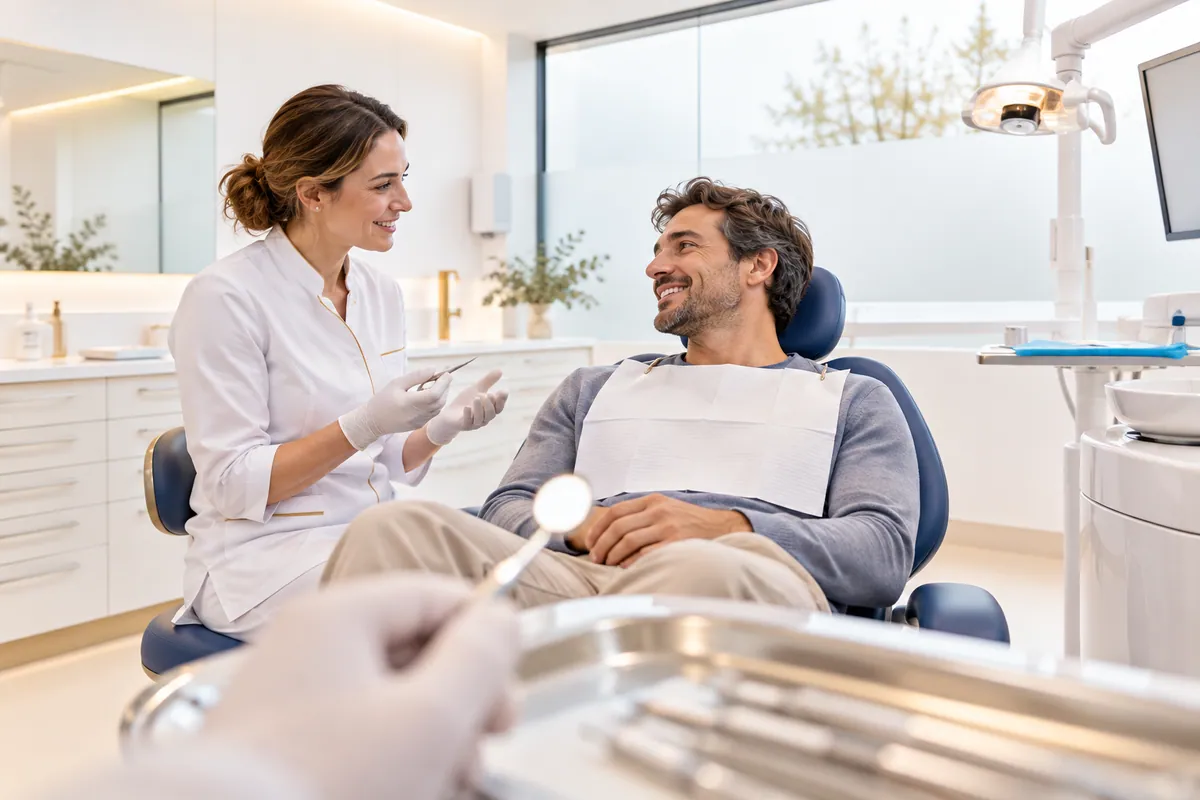
Losing a tooth can change how you eat, speak or smile. It can also raise many questions: whether it needs replacing, which options exist, how long each stage takes and what care will be needed afterwards. A dental implant is one option, but its suitability depends on your mouth and general health. The decision starts with a diagnosis, rather than choosing a brand or looking at a photograph of someone else’s result.
This guide explains concepts worth understanding before an implant consultation in Pamplona. It aims to help you prepare for the visit, understand a proposal and take part in decisions. It cannot determine online whether you need an implant or replace an examination. Nor does it offer a universal timetable: two people missing the same tooth may need different plans because of their bone, gums, neighbouring teeth or previous treatment. Dental implants.
The main principle is to assess the missing tooth, the mouth as a whole and the ability to keep a future restoration clean. Treatment does not end on the day the visible tooth is fitted. Follow-up, cleaning and reporting changes are all part of long-term care.
What an implant is and which components are involved
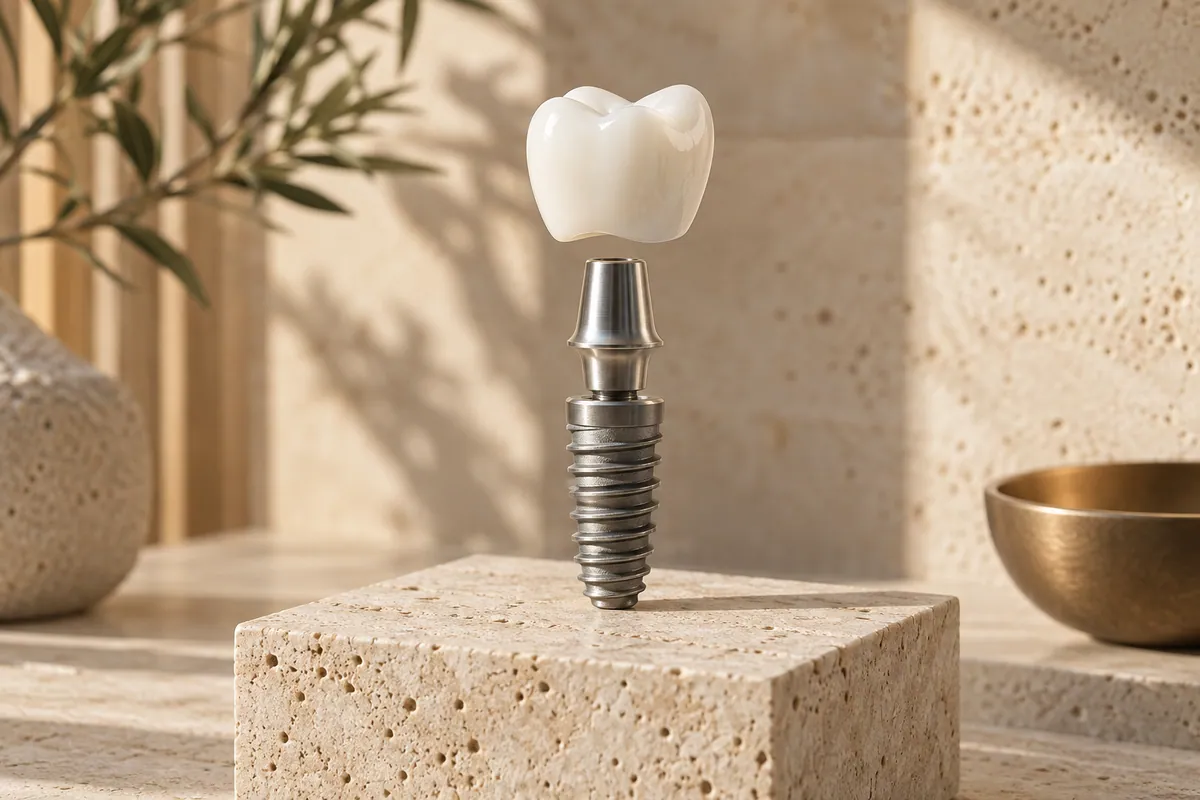
In general terms, an implant is a component placed in bone to provide support. A restoration, such as a crown, connects to it using the components required by that system. Distinguishing these parts matters because “implant” sometimes describes the entire process and sometimes only the component in the bone. That difference is relevant when reading a cost estimate and asking what is included.
The crown is the visible part involved in chewing and the appearance of your smile. Its design, connection to the implant and accessibility for cleaning are important considerations. A complete plan addresses surgery and the prosthetic stage. When several teeth are missing, support and restoration options also change; the number of implants cannot be determined simply by counting gaps.
Ask for the plan to be explained with a drawing or model if that helps. Showing which component is fitted first and which follows often clarifies the process better than technical names alone. You can also ask which components will be documented, as those details may be useful for maintenance at another clinic or identification of a replacement part in the future.
What is checked before recommending an implant?
Examination considers gum health, cleaning, the bite, available space and the area where the tooth is missing. The professional decides which imaging is needed to assess bone and nearby structures. Patients do not all need the same investigations. An isolated image cannot determine treatment without being considered alongside medical history and examination.
Tell the team about known conditions, allergies, medical treatments and medication, including non-prescription products. An up-to-date list avoids relying on memory. If the area has been treated before, bring available reports or images; the team will assess their usefulness and whether further information is required. Do not stop any medication yourself to prepare for an operation.
Smoking, previous periodontal problems and certain health conditions can influence planning and risk. Discussing them allows realistic consideration of alternatives and care. The consultation should not become a judgement on your habits. It is an opportunity to identify what can be improved before a procedure and what monitoring will be needed afterwards.
A useful list for your first visit
Before attending, note which tooth is missing and roughly when it was lost, any discomfort, whether you have worn a prosthesis and what you want to regain in daily life. Your priority may be chewing on that side, improving an unstable denture or understanding an earlier proposal. Explaining this helps guide discussion. If exact dates are unclear, describe the sequence without trying to reconstruct a perfect history. Dental prostheses.
Which alternatives should be discussed?
An implant is not the only way to address a missing tooth. Depending on the case, bridges or different prostheses may be considered, as may preservation of teeth that remain treatable. Alternatives have different indications, limitations and maintenance needs. Compare them in relation to your circumstances, rather than ranking them generally as “good” or “bad” solutions.
Ask what each option means for neighbouring teeth, how it will be cleaned, whether it is removable or fixed, what reviews are needed and what could happen if treatment is delayed. Asking about delay does not mean waiting is always appropriate. It helps clarify clinical priority and distinguish necessary care from decisions that allow time to gather information.
If a tooth is still present, clarify why keeping or extracting it is proposed. Asking about prognosis is a way to understand the findings behind a recommendation. A clearly explained comparison supports consent by showing what treatment aims to resolve, what it cannot address on its own and which continuing care commitments it involves.
Limited bone: why the plan may change
Available bone quantity and shape influence implant placement. Some cases involve consideration of bone augmentation or techniques related to the maxillary sinus. These are general options in implant dentistry, rather than automatic recommendations for everyone told they have “limited bone”. That description needs clarification: where bone is lacking, which dimensions are limited and which alternatives are reasonable. Implants with limited bone.
An additional procedure may change the stages, healing time and cost estimate. Ask whether it is proposed before implant placement or at another stage, what it aims to achieve and how progress will be assessed. Do not assume that every technique is offered by every clinic or that any technique removes the risks of surgery.
When comparing two proposals, check that they describe the same starting point. One may include preparation that the other has not yet assessed. Before comparing prices or dates, ask for the diagnosis, planned restoration and possible contingencies to be explained. Comparing complete plans is usually more informative than comparing the advertised price of one component.
The stages: from planning to restoration
Care may involve addressing existing oral problems, placing the implant, allowing healing and preparing the restoration. The order depends on the case. Some stages can be combined; others need separation. A temporary tooth is also an individual decision and should not be assumed simply because you have seen an offer of “teeth in a day”.
Ask for a schedule that distinguishes appointments from biological healing periods. These are different. An interval without a procedure may be an essential healing phase, rather than a sign that treatment has stopped. The team should explain the follow-up, what you can do during that time and whom to contact if anything changes.
Discuss travel, periods when you cannot attend and work commitments before starting. This helps organise care, but a personal deadline cannot determine how quickly tissues heal. If an event is approaching, raise it early and ask which options are sensible and what cannot be guaranteed. Knowing the limits in advance helps you plan around treatment more realistically.
Recovery: instructions matched to your procedure
Aftercare should come from the team that knows which surgery was performed. Its extent, the tissues involved and your health influence the advice. Before leaving, check how to care for the area, which foods or activities need adapting, any prescribed medication and the review date. Request written instructions if these will be easier to consult later.
Do not use this guide to replace individual instructions or add treatment yourself. If advice seems to conflict with something online, ask the clinic. General recommendations may concern a different procedure. Clarify which discomfort is expected in your case and which changes should prompt contact, rather than guessing from another patient’s experience.
Bleeding that does not stop, markedly worsening pain, increasing swelling or fever warrants professional advice. Difficulty breathing or swallowing, or substantial swelling affecting these functions, requires urgent care; call 112 when appropriate. Do not wait for a website form to be answered in an emergency. The appropriate response depends on the seriousness of the symptoms.
Implant cleaning and maintenance
An implant is not a natural tooth, but it still needs care. Surrounding tissues require suitable cleaning and monitoring. The shape of the restoration may call for specific tools to reach surfaces and spaces. Ask for a demonstration using your own prosthesis: knowing which tool to buy does not solve the problem unless you understand how to use it.
Reviews assess tissues, check the restoration and identify changes you may not have noticed. Their frequency reflects risk and the condition of your mouth. Previous periodontal disease or cleaning difficulties may require a different schedule from that of another patient. Keeping agreed appointments allows advice to be adjusted to your actual progress.
Report bleeding around the restoration, a persistent unpleasant taste, new discomfort or a feeling of movement. Do not tighten components, glue a crown or modify the prosthesis at home. Movement may have different causes and needs identification. A timely consultation allows assessment without requiring you to decide whether the issue involves the implant itself or the restoration.
Understanding an implant cost estimate
Request a document identifying the stages and items included. Ask about investigations, preparatory procedures, surgery, prosthetic components, the crown or prosthesis, temporary restorations where appropriate and planned reviews. Every case need not have identical items. The purpose is to understand what your proposal covers and which circumstances could change it.
Read the estimate alongside the diagnosis and plan. A price without that context does not explain what you will receive. Ask for unfamiliar terms to be translated into practical actions: what is fitted, its purpose, when it happens and whether it is included. Note the answers so you can compare calmly without relying solely on memory.
You can also ask about maintenance, repairs and follow-up arrangements, while distinguishing these from a guarantee of biological outcome. No treatment can promise the same lifespan for everyone. A well-informed decision combines clinical suitability, understandable information and the ability to maintain care, as well as the financial arrangements you need.
A practical checklist for discussing your implant plan
It can help to divide your notes into the information you already have and the questions you still need answered. In the first group, put the reason the tooth is missing, any previous treatment in the area, the medicines you take and the difficulties you currently have with eating or cleaning. Add any reports available to you. You do not need to interpret scans or decide whether there is enough bone yourself; those are questions for the assessment.
For the proposed plan, ask the clinician to identify the part placed in the bone and the restoration that will eventually be visible. Check whether the estimate covers both, together with any preparation, temporary restoration and reviews described. If there are several teeth to replace, ask how the planned restoration will be supported and how you would clean beneath or around it. An illustration can make the arrangement easier to understand, but the explanation should still relate to your examination and the option actually proposed.
Consider the practical timetable as well as the clinical stages. You may need to organise work, transport or help at home around an appointment. Tell the team about those constraints and ask which instructions will depend on the procedure. Avoid making assumptions from another person’s recovery. If you have travel planned, discuss the dates before committing to treatment so the clinic can explain how they fit with the proposed reviews. The schedule remains subject to your clinical needs and response.
Before deciding, check that you know whom to contact between appointments and how any change to the plan would be explained. A useful written summary distinguishes what has been agreed from what still depends on assessment or healing. Keep it with the aftercare instructions and any implant information you are given. If you later move or change dental practices, those records can support continuity alongside a new examination.
Finally, return to your original priority: replacing a missing tooth, improving a difficulty with chewing or understanding your options. Ask how the proposal addresses that priority and which limitations would remain. You can request clarification without needing to use technical language. Understanding the purpose, stages, costs and future care makes it easier to judge whether the plan suits your circumstances and to take part in decisions as treatment progresses.
Frequently asked questions before deciding
Will an implant last for life?
A lifelong result cannot be guaranteed. It is more useful to ask which risks apply to your case, what maintenance is required and how complications would be managed. An absolute promise does not replace that discussion or predict how an individual will respond to treatment. Your own risk factors and continuing care remain relevant throughout follow-up.
Can a photograph show whether I have enough bone?
A smile photograph cannot provide all the necessary information. The professional combines examination with investigations indicated for the area. Existing images may help, but their relevance and current validity need assessment. Do not treat informal advice by messaging as confirmation that surgery is possible or that no additional stages will be needed.
Is treatment the same for one missing tooth and several?
Not necessarily. Support, space, restoration design and distribution of forces differ. Several missing teeth may call for a solution other than simply adding individual implants together. Ask why a particular arrangement is proposed and how you will clean the final restoration. The explanation should relate to your mouth and the planned replacement.
What if I am afraid of surgery?
Mention this at the first visit. Explaining what worries you helps the team organise information and discuss suitable measures. You do not need to accept a procedure without understanding it or hide a difficult previous experience. Specific anxiety-management options must be agreed with the team and cannot be assumed from a general internet description.
Should I book an assessment if the gap does not hurt?
Pain is not the only reason for assessment. You can ask about the area and available alternatives even when your main concern is functional or aesthetic. The visit establishes whether treatment is needed and its priority. It does not mean you must start immediately or choose an option before receiving a clear explanation.
Preparing for an implant consultation in Pamplona
To discuss your case, explore the implant page and request an appointment with Dental Divina Pastora at Calle Loza, 4, Pamplona. The first step is to explain your circumstances and arrange a visit. A contact request is not a confirmed appointment or final cost estimate. Bring your medication list and available treatment information to support the conversation.
Aim to leave with four points clear: which options are reasonable, the stages of each, the risks and care involved, and what happens next. Ask for a different explanation if anything remains unclear. The aim is not to learn every technical term in implant dentistry, but to understand the proposed plan for your own mouth and participate in the decision.
Which documents should I keep afterwards?
Keep the accepted plan, aftercare instructions and implant-system identification details when supplied. Store them with your review records so you can explain previous care if you move or see another professional. You do not need to interpret each technical reference; being able to provide it is enough. If something is missing, ask how to request a copy from your records. Implant care is ongoing, and a clear history supports future decisions.